Vintage 1976 Design Review: A Crafter’s Perspective
As a designer who spends more time staring at stitch maps than I do sleeping, I have learned that not every digital file translates well to thread. We live in an era where T-Shirt Designs and Graphics are abundant, but finding a design that holds up under the needle requires a critical eye. Recently, I pulled the Vintage 1976 49th Birthday Gifts file into my workspace to evaluate its potential for real-world application. This is not just about downloading a SVG; it is about understanding how a nostalgic theme performs when transformed from a screen pixel into a tactile, stitched reality.
The First Impression: Nostalgia Meets Structure
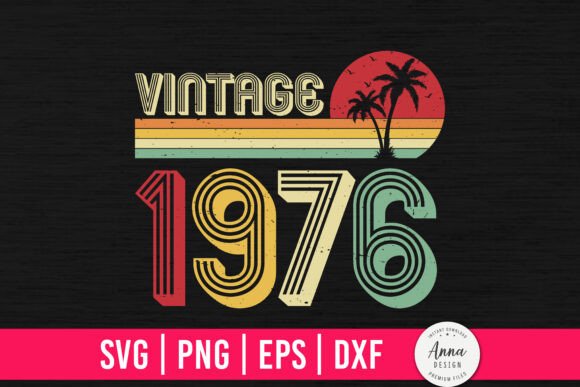
When I first opened the Vintage 1976 49th Birthday Gifts design, the immediate mood was one of warm, retro celebration. The typography and layout suggest a classic aesthetic that appeals strongly to the milestone birthday market. For those of us creating handmade products, mood is half the battle. If the design does not evoke an emotion, the customer will scroll past. This particular graphic carries a weight of history, referencing the year 1976, which instantly connects with anyone turning forty-nine. It feels personal, yet universal enough to be a bestseller for an Etsy seller or a boutique owner.
Visually, the design relies on bold lines and clear spacing. This is crucial for embroidery. Unlike print-on-demand services where ink can blend seamlessly, embroidery has physical limitations. Thick threads cannot occupy the same space as thin vector lines without causing puckering or breakage. The structure of this design appears robust enough to handle conversion, provided the digitizer respects the negative space. It does not look overly cluttered, which is a promising sign for clarity once stitched.
Real-World Application: Beyond the Screen
I decided to test the viability of this design by imagining it on a few specific items. My primary test case was a heavy-weight cotton tote bag. Tote bags are popular custom apparel accessories and gift items, but they present challenges due to their weave and tendency to shift. The Vintage 1976 49th Birthday Gifts motif, with its strong horizontal presence, would sit nicely on the center panel of a tote. However, I would avoid placing it too close to the bottom seam where the fabric might bunch in the hoop.
Another strong candidate is a crewneck sweatshirt. Sweatshirt embroidery is a staple for personalized gifts. The fleece backing of a sweatshirt provides natural stability, which helps prevent the design from sinking into the fabric. For a 49th birthday, a soft, heather-grey sweatshirt with this vintage-style graphic stitched in cream or gold thread would look sophisticated and high-value. It moves the item from a simple garment to a keepsake. This is where the design shines: it elevates the perceived value of the finished product.
I also considered its use on a structured cap. Caps are tricky. The curved surface distorts designs, and the thick seams require careful hooping. While the Vintage 1976 49th Birthday Gifts design could work on a cap, I would recommend scaling it down significantly. Large, wide designs often wrap awkwardly around the front panel of a hat. For caps, simplicity is key, so ensuring the central elements remain legible at a smaller size is essential before committing to production.
Technical Considerations for the Embroiderer
Let us talk about the mechanics. The product description notes that this is a digital embroidery file available in SVG, PNG, DXF, and EPS formats. It is vital to understand that SVG and DXF are cut files, while embroidery machines require specific stitch files like PES, DST, or JEF. If you are using this for a cutting machine like Cricut or Silhouette, the vector paths are perfect. However, if you are stitching, you must ensure you have the correct embroidered version or digitize it properly. Assuming we are working with a properly digitized embroidery file, here are my technical notes.
Stitch Density and Fabric Texture: Vintage styles often look best with a slightly textured fill rather than a solid, dense satin stitch. If the design uses large fill areas, check the stitch density. High density on thin fabric will cause puckering. I always recommend testing on scrap fabric first. Use a medium-weight cutaway stabilizer for knit fabrics like t-shirts and sweatshirts, and a tear-away for woven totes or aprons. This ensures the embroidery project remains flat and professional.
Thread Colors and Contrast: The success of this design hinges on contrast. Since it is a vintage theme, muted tones work well. However, if you are stitching on a dark navy or black garment, you must use light-colored threads to ensure readability. Do not rely on subtle shading. In embroidery, subtle often reads as messy from a distance. Test your thread colors against your fabric background. A quick black-and-white mockup can reveal if the design holds its shape without color reliance.
Small Details and Lettering: The year "1976" and the number "49" are likely the focal points. Ensure these elements are not too thin. Thin lines break easily and can get lost in the nap of a towel or fleece. If the design includes intricate serifs or small decorative accents, consider simplifying them or increasing the line weight. This is especially important for baby embroidery or items that will undergo frequent washing. Durability is part of the design quality.
Commercial Viability and Brand Consistency
For craft business owners, consistency is brand currency. The Vintage 1976 49th Birthday Gifts design fits neatly into a niche market. It is not a generic "Happy Birthday" graphic; it is specific. This specificity allows you to target customers searching for meaningful milestones. When you list this as a small shop product, highlight the vintage aspect. Use keywords like "retro birthday," "1976 vintage," and "classic anniversary" to attract the right buyers.
However, be mindful of licensing. The product description mentions it is a digital file for cutting machines and includes print-ready files. Always confirm whether the license allows for commercial use of finished physical items. Most designers allow you to sell the embroidered patch or shirt, but reselling the digital file itself is usually prohibited. Clarify this before listing your design assets for sale. Transparency builds customer trust and protects your shop from legal issues.
Final Verdict: Is It Worth the Stitch?
After evaluating the Vintage 1976 49th Birthday Gifts design from multiple angles, I find it to be a strong contender for seasonal and milestone collections. It possesses the visual personality needed to stand out in a crowded marketplace. It works exceptionally well on stable fabrics like canvas totes and sweatshirts, where the stitch definition can be fully appreciated. While it requires careful attention to scale and stabilizer selection, these are standard practices for any serious embroiderer.
For the commercial embroidery professional, this design offers a balance of nostalgia and modern appeal. It is not just a graphic; it is a conversation starter. When executed with proper tension, quality thread, and appropriate fabric choice, it transforms a simple item into a cherished holiday embroidery gift or a proud statement piece. My advice is to run a test stitch, adjust your tension, and let the vintage vibe do the rest. The market for personalized, meaningful gifts is evergreen, and designs like this are the tools that help you tap into it effectively.